Showing posts with label reading. Show all posts

Friday, February 1, 2013

Acquired Tastes

As a child I tried a sip of wine at a wedding. After I had wrinkled my nose in disgust, my mother told me it was an acquired taste. Someday I would feel differently. Perhaps I was just a precocious or challenging child, but I had to ask, "Why would anybody take the time to acquire a taste?" And I couldn't understand why you would drink something that wasn't quite pleasant.
As I grew older, I did in fact acquire a taste for many things that I initially couldn't tolerate: beer, wine, cheddar cheese, tomatoes. In fact those are practically four of my basic food groups currently. I've found that tastes other than those in my mouth have developed as well.
In high school, I couldn't stand Virginia Woolf. My advanced placement English group read To the Lighthouse. I found it tedious. I didn't like Woolf's style. The whole thing felt rather pointless to me. Last year I came back to it. I admit that I was reluctant to revisit the novel, I only did so for a British literature class. Imagine my surprise when I found that there was something in the novel I had missed the firs time around: humor. With the space of a few years between me and my previous experience with the book, I found it to be a very different text. This summer I read Woolf's Between the Acts and found that to be a very interesting, if somewhat fatiguing book.
That's the strange thing about novels. They may not be factual, but they tell us truths. Usually truths about ourselves. Many readers will have one book they return to over the years that stands as a sort of gauge for that. The text remains the same. We're the ones who change.
Literature is not entirely unique in this way. I've had similar experiences with music as well. When I first heard The Decemberists, I wasn't sure about them. There was something odd about their sound. It was like my ear needed to be calibrated to their music. And eventually it was. Now they're one of my favorite bands.
Perhaps that's the difference between disliking something and needing to acquire a taste for it. Things that you acquire a taste for are unsettling. You don't like them at first, but there is something intriguing about them. Something deeper to the taste, the sound, the text. When you spend more time around it or return to it later, you begin to uncover that depth. It's almost like you have to work for your appreciation of that that thing. That makes your attachment to it greater in the long run. Maybe it's a little like falling in love? But, matters of the heart are not my area of expertise.
What things have you had to acquire an appreciation for over time? Or what things have you considered trying again after finding it initially unappealing?

Tuesday, January 10, 2012

Quick Review: One Good Turn by Kate Atkinson

I read this over week ago, but haven't had time to review until now.
At the end of Case Histories Jackson Brodie ran off to France with his inheritance for an early retirement. One Good Turn sees him back in the UK two years later. He arrives in Edinburgh for the festival to see his girlfriend Julia in a play and finds himself in the middle of police investigations and in the cross-hairs of Louise, a no-nonsense female officer.
The plot sees several seemingly unrelated crimes: a fit of road rage, the body of a girl washed up on the beach, and the unscrupulous practices of a business man, but they all prove to be connected. Atkinson richly illustrates the lives of these characters, making each one come alive, not just Jackson. One of the best characters is Martin, a soft-boiled crime writer who is hapless, but sympathetic. Atkinson clearly has fun writing passages from Martin's formulaic stories. Gloria the middle aged wife and Tatiana "Jojo" the dominatrix form an interesting alliance to find their own brand of justice. The introduction of Louise as a match for Jackson was a good move as well, I hope that's developed more in the next book. I never liked Julia as his romantic interest.
This is a rare example of the sequel being superior to the original. Atkinson improves on her ability to balance multiple stories and bring them all back to Jackson, the linchpin. The way all the cases end up intersecting is creative and intriguing. She makes you interested in all their lives, even when they make mistakes, even when they break laws, they still have your interest, your sympathy. Rather than the unrelated stories of Case Histories, One Good Turn brings everything together to make a more cohesive story.

Monday, December 26, 2011

The Weed that Strings the Hangman's Bag by Alan Bradley

Flavia de Luce, girl chemist with a possibly unhealthy interest in death is on the case again. In this sequel to The Sweetness at the Bottom of the Pie, a puppet show run by the charismatic and crippled by polio Rupert comes to town. His assistant Nialla has been placed in a desperate position.
When Rupert ends up dead, Flavia is left to untangle the strings of this mystery. Rupert may be more than just a passerby, his history and the history of the inhabitants of Bishop Lacy prove to be tangled together. The mysterious death of a village boy, the mad woman in the woods, and secret liaisons all conspire to make a puzzle for Flavia to solve.

I very much enjoyed The Sweetness at the Bottom of the Pie and was interested in seeing how Bradley would follow it up. He continues to explore Flavia's unique skills and talents. We gain insight into her thought process and her talent with chemical equations. Also though, Bradley expands on her emotional life as well in this volume. Her anxiety over her relationship with her sisters and her questions about the mother she never knew are touched on.
Some of the Bishop Lacey residents of the first novel appear again, but we are introduced to other locals who each help Flavia piece together the solutions to the Rupert's death as well as a death from half a decade before.
Though perhaps, lacking some of the dramatic tension of the first novel, it's still a fun read. Bradley's chapters move quickly, each one fairly short and moving. There are some satisfying twists that may come as a surprise. The solution to the mystery, however left me with mixed feelings, especially over how the murderer should be punished.
The Weed that Strings the Hangman's Bag is a fun, quick read that takes you back into the world of Flavia de Luce, a charismatic, but flawed and surprising believable young girl with remarkable skills. The third book A Red Herring Without Mustard will go on my TBR list. Sequels don't always live up to the quality of the first, but this novel came fairly close.

Thursday, December 22, 2011

The Secret History by Donna Tartt

The novel opens with Richard, our narrator and protagonist thinking back on the murder he and his friends committed back in college. From there we go back to how this story began, making this a sort of inverted murder mystery. We know the victim, we know the killers, now we need to find out why.
At a small college in New England, a select group of students study the Classics with Julian, a charismatic professor who is well traveled and well loved by his students. Richard, newly transferred from California with some Greek study in his background wants to join the class, but has to be accepted by Julian personally. When he finally is, he immediately begins to form bonds with Julian's students.
There's Henry, a genius that seems to live more in the world of the classics than in real life. Charles and Camilla are the twins, they are very close and very secretive. Frances, a sensitive young man with access to his aunt's country home is also among the group. And finally, there's Edmund "Bunny" Corcoran. His family maintains an air aristocracy, but appear to be broke, equipping their son with nothing but skills at mooching off of everyone else and a crude sense of humor.
We learn in the first pages that Bunny is the murder victim. After that we go back and get the story about secrets, ancient rituals, and desperation that lead to his demise.

Overall, it's a decent story. In spite of the obvious tension within the story, there were many sections of the book that simply could not keep my attention. Passages meandered and seemed as listless as its characters after a night of bacchanals. Yes, its college student characters are constantly (infuriatingly) drunk or high, especially Richard, the narrator who wanders around getting drunk and doing cocaine for an alarmingly large amount of the time.
It's true that these are young people, and young people tend to experiment, but it seems excessive in Tartt's prose. I also began to wonder why this group of students was considered so elite, other than Henry, there was little to illustrate any impressive aptitude from them.
The novel was structured after a Greek tragedy. Early on Tartt brings up the elements of fate and the possession of a fatal flaw. In a way, looking at a modern situation through a lens of ancient tragedy can work. There is a fatal flaw, there is a fall, there is a noble sacrifice, and there is a sense of repayment and justice in the end.
Tartt is moderately successful at creating this tragic world. Richard serves as our messenger (as every good Greek play should have) who tells us how this tragedy befell our heroes and how they had to pay for it. It wasn't a bad novel. If you enjoy Greek tragedy and murder mysteries, you may find something of interest here. However, it makes sense that this was Tartt's first novel. She shows that she has talent, but she is not entirely successful with her execution.
This is a good novel to compare with Carol Goodman's Lake of Dead Languages which I reviewed a few months ago, as it deals with many similar themes. Although also flawed, I prefer Goodman's novel because of its taut, poetic language.

Wednesday, December 14, 2011

Life Changing Books

Let's talk about life changing books. The books you read that change the way you think about something, the way you see the world. There are so many books that have effected the way I think and feel. Here are just a couple of the significant ones.
A Series of Unfortunate Events:
These were my favorite book when I was young. Even into high school I read the later ones as they came out. These were so different than most books for young readers, they were dark, ironic, they sent me to the dictionary and made me love all the rich and wonderful words.
The Bell Jar: Such a wonderful book about identity, insanity and growing into young womanhood. Disorienting and razor sharp. I read this in ninth or tenth grade and loved it.
Slaughterhouse Five: Probably the best war story I've ever read. Kurt Vonnegut's genre blending and wry humor intrigued me, occasionally confused me, but ultimately enthralled me. It changed my perspective on trauma. So it goes.
Jane Eyre: Probably the first book I read that made me feel like I was the narrator, we were one. I was eighteen, dealing with isolation and trying to determine where to go with my life, this book helped me through so much.

There are so many more that have touched me or taught me, but these always stand out when I think back on my life.
What are your life changing books?

Saturday, November 26, 2011

Possession: The Book vs. The Film


Possession is a romantic novel that traces the love affair between two Victorian poets as well as the story of the modern academics piecing together the trail of letters they left behind. The novel is beautiful, full of the lush language A.S. Byatt was famous for. Though, there are some long passages of poetry that seem a little indulgent and unnecessary, you gradually get more and more drawn into the story of the Victorians, Randolph Henry Ash and Christabel LaMotte.
I saw the 2002 film last night with starred Gweneth Paltrow and Aaron Eckhart as Maud and Roland, the modern academics turned historical detectives. Jeremy Northam and Jennifer Ehle play Ash and LaMotte.
Of course the film makes many cuts so that it can fit in a 1 hour and 40 minute time slot. They trim down many things (like some of the epic poems) that don't effect the story too much, but the film seemed to be missing something deeper. The character of Roland, especially seems underdeveloped. Everything seems to happen very quickly and some of the slower, more character driven moments from the book are missing.
Filmmaker and playwright Neil LaBute does tap into a few highly emotional moments which came as a surprise to me. His plays are often rather cool and cynical, but he found his romantic side while working on this screenplay.
Even though it's not my favorite of Byatt's novel, it is certainly worth the reading, even if you've seen the film. If you've read the book, but haven't seen the movie, it's nice to see the story brought to life, but you may have the strange sensation of missing the characters you know from the book. As with nearly any book to film, the book is better, but it was a decent adaptation. Still interesting, intelligent, and romantic. It will never be the way I saw it in my head, of course, but that's always the problem with adaptations.

Wednesday, October 19, 2011

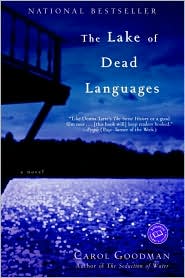
The Lake of Dead Languages by Carol Goodman

Jane returns to Heart Lake, the boarding school she won a scholarship to as a freshman in high school. After divorcing her husband, she gets a job at the school teaching Latin, but her past won't let her go.
Her senior year, her two roommates, Deidre and Lucy, as well as Lucy's brother, killed themselves. The lake holds so many memories for Jane, most of them bad. When the events from her senior year seem to be occurring again, Jane is the only person that can unravel the threads linking the past to the present.

This book is eerily similar to Goodman's Arcadia Falls, but at the same time, a much better book. The setting of a boarding school with its atmospheric woods and equal parts beauty and danger, are the setting for both these novels.
The Lake of Dead Languages is a highly atmospheric book with a suspenseful plot. However, the suspense dwindles around the middle of the book where it becomes obvious what all the plot twists will be. There are very few surprises in the latter part of the book. One keeps reading just to make sure they are correct and hoping for a new turn that makes it exciting again. Unfortunately, that doesn't happen.
Goodman assumes the sophistication of her audience, peppering it with classical allusions, thoughtful comparisons, and plenty of Latin phrases. This is refreshing when compared to authors who write down to their audiences with 6th grade vocabulary. Some of the comparisons of within the story to the writings of Ovid and others do seem a little indulgent.
I would still recommend it for fans of modern gothic literature. Part of me wants to read more of Goodman's writing because of her lushness of language. The other part is afraid I'll be stuck in the same story for the third time.

Monday, October 10, 2011

Fall Reading Mini Reviews

I've just finished my reading of A.S. Byatt's Possession. It wasn't quite as luminous as The Childrens Book. It was very intellectual, less emotional, but as the stories grows, it does grip you. Part historical, part mystery, part love story, Possession explores the nuances of what ownership means. Possession of our hearts, minds, bodies, objects. It also evaluates the genre of "romance" and classifies itself as such, but presents many variations on the term.
Besides my readings for class for this week (The Friar and Summoner's tales for my Chaucer course and Toni Morrison's Bluest Eye for my contemporary lit class), I'm working my way through Corduroy Mansions by Alexander McCall Smith.
So far I'm enjoying it. Smith has a timeless, light, whimsical style and a clever way of entwining the stories of the lives connected together by the Mansions. After I finish this novel, I'd like to try some of his mysteries.
Next on the pleasure reading agenda is Case Histories by Kate Atkinson. It was suggested by my advisor and I just found out that Masterpiece Mystery is showing an adaptation of the story next week. I'm such an English major. I unwind from class readings by reading.
Today I have a respite from my classes and am using it to catch up on work as well as baking scones while singing Florence + the Machine at the top of my lungs.

Thursday, September 22, 2011

We are the Snowdens of yesterday- Thoughts on Catch-22


We just finished our study of Catch-22 in my Contemporary American Literature class. My experience reading it for class was much different than my first time reading it-- then again, I was about 13 the first time I read it.
Though I did appreciate the irony and concept of the "Catch-22," on this reading I began to appreciate the text as a story of trauma. The circular, recurrent pattern of the story always returns to the Avignon mission where the gunner, Snowden was killed. The way the story is told in waves of memory, often out of order it isn't just to create a state of chaos, it has psychological significance. Slowly we get closer and closer to the trauma, we get closer to Snowden's "secret" and the impact in had on Yossarian.
Heller plays with language and the inversion of expectations. The "secret" is not what we're expecting it to be. He can turn a whole situation or character in one sentence.
In class we were discussing the shift in the second half of the novel. No longer just bizarre and surreal, the world becomes a nightmare that the characters are constantly waking into. It's a fight for identity and the definition of what Catch-22 is become more and more sinister. There is less humor to find in the ending chapters. Yossarian's frustration at the insane world around him becomes our frustration as well. We are equally gutted by the horrendous deaths of characters we've come to know earlier in the story.
I really enjoyed my rereading of Catch-22, though enjoy seems the wrong word to use. I can appreciate Heller's contribution to the changing landscape of literature. It was difficult at some points, but when I finished and set it down on the table, I knew it was one of the good books, one that I'll never forget.

Friday, September 2, 2011

Variations on Little Red Riding Hood and Sleeping Beauty

The first reading for my honors course had us reading different versions of the classic stories Little Red Riding Hood and Sleeping Beauty. From different times and countries, some of the variations are startling.
The morality tale for children to learn obedience, Little Red Riding Hood has sometimes included blatant references to canabalism where the wolf makes Little Red eat some of her grandmother and drink her blood. The earliest version of the tale actually describes the wolf as a sort of werewolf creature, half man, half wolf. The sexual danger posed by the wolf depending on the tale-- some version play on the idea of the wolf as a sexual predator, making Little Red take off her clothes and get into the bed with him.
Some version do allow Red to be more than an unwitting victim, but rather she cleverly outsmarts the wolf. In an early Chinese tale that also shares elements with The Three Little Pigs, three young sisters outsmart and kill a wolf that comes to their door while their mother is away.

Sleeping Beauty also contains canabalism in several versions of the story. A jealous wife or mother to the beauty's prince/king lover tries to eat both the Sleeping Beauty figure and her children on several occasions. The earliest Sleeping Beauty story in the book involved a philandering king coming upon Talia (the beauty) unconscious and basically raping her in her deep slumber. The Brothers Grimm story, Briar Rose, is by far the tamest version of the tale, but tells it more from the perspective of the prince. The chapter wraps up with "Sleeping Beauty and the Airplane" a clever modern take on the idea of the unattainable sleeping princess from the perspective of a modern day would-be prince.
It's just interesting to analyze how these stories have changed over time and what each change enhances. Sleeping Beauty seems to promote female passivity in most version, while Little Red Riding Hood encourages wariness and obedience.

Saturday, August 6, 2011

Arcadia Falls by Carol Goodman


This book was courtesy of the local library. I selected it by playing the "shelf game" where I pick a random shelf of books and grab whatever looks good to me on it.
When recently widowed Meg Rosenthal brings her daughter to the Arcadia boarding school for the arts it feels like stepping into a fairy tale, a fairy tale that brings the fears of nightmares to the surface. In fact, Meg's favorite story growing up, The Changeling Girl was written by the school's founders, Lily and Vera.
Meg's financial difficulties and relationship with her teenage daughter Sally move her to take the post at the school, but they don't signal an end to her problems. During the First Night celebration a student dies in a way the mimics the death of Lily 60 years before. Meg is soon untangling the past to better understand the tragedy of the present.

Goodman has deeply steeped her story in symbolism and myth. She plays with a circular sense of justice and connection that, though initially proves satisfying, feels redundant and improbably by the end of the book. The first seven eighths of the book are enjoyable and engaging, you unravel the mystery along with Meg and feel the atmosphere of the woods and her crumbling cottage.
One also feels invested in Sally's development and the relationship between mother and daughter. Indeed, this story continually comes back to the legacy a mother leaves for her child and the relationships between women. The characters of Sally's school friends sometimes come across as cardboard cut-outs, with the exception of Chloe, who also grows as the story continues. Goodman also strives add realism to her teenage characters by pop-culture references which come across as startling, especially when compared to the ethereal sense of timelessness she cultivates through the rest of the book.
Arcadia Falls is a suspenseful story about the lives of women, about love and sacrifice. It combines mystery with family drama, history, and even a little romance. It is a decent read for a sticky summer afternoon or a long trip, but the ending still annoys me. Unfortunately, though there are many things to like about this book, it is uneven.

Sunday, July 10, 2011

Uncomfortable Plateau

I've reached the point in my summer where I am in a slump. My sleeping schedule is obliterated, I've done some things that can marginally be considered achievements, but I'm not sure how I can best use the next month.My plans for travel are distant, fragmented dreams thanks to circumstances beyond my control.
I've realized that being self-employed is a major test of my self-discipline. My vigor toward freelance writing has diminished somewhat due to the lack of response from many editors. Most are not even courteous enough to reject me. This is something I'll have to get used to, especially if I do want to make part of my living from it in the future.
I've pretty much finished with this round of edits on my novel and I've written a basic query letter and book proposal. However, I've yet to send anything out to anyone. Perhaps it's because while it's still in my hands it's still my wonderful masterpiece. Once it enters the world it could be shredded in an instant.
I know it doesn't have to be ready for immediate publication, it will have to go through more editing even after someone has agreed to represent it, but it's a matter of professional pride I suppose-- I want it to be perfect.
This past week I've made no progress on either my freelancing or my search for an agent. I've been making soap and reading novels. I'll be at the farmer's market next weekend selling some.
So, sorry it's been quiet on this front, I have been a curious mix of busy and idle recently.

Wednesday, July 6, 2011

The Hunger Games

After many suggestions and hearsay, I finally picked up a copy of this novel at the local book store. I started last night around 11 and finished it just before 3 am.

In a dictatorship made from the wreckage of what once was North American, The Capitol hosts a yearly competition called "The Hunger Games." One male and one female child between 12 and 18 is chosen from each of the 12 districts (district 13 was nuked years ago). Placed in an arena that changes landscaped every year, the 24 children must battle until only one remains. It is to remind the people of the districts that The Capitol is in control, they can make them watch their children kill each other on tv and there is nothing they can do about it.
When Katniss hears her 12 year old sister summoned for a place in the games, she volunteers to take her place as the girl from District 12, the coal mining district.

The novel sprints along at an unstoppable pace, making it a definite one sitting book. Though there are moments that fall from expectation, Suzanne Collins is not lacking in creativity when it comes to illustrating the brutality of The Games. Her creation of a bleak, futuristic world is a believable projection. The eerieness of reality tv becoming a weapon feels almost prophetic.
Her main character, Katniss is strong. She is aged beyond her years and a skilled hunter with a bow. Watching her tentative relationship with fellow competitor Peeta bloom is riveting, but sometimes frustrating as her wishy-washy interal monologues continue. Still, Katniss is a survivor. That is why she is so hesitant to trust anyone, but the moments when she is touched in spite of her armour are truly emotional.
Of course, the real battle is not just against the other competitors in The Games, but the government that forces it on the people... which is focused on in the next book Catching Fire. I just started on that this afternoon.

Tuesday, June 28, 2011

Teaser Tuesday: Third Girl

I'm just finishing this novel of Agatha Christie's from the 1960s. The novel features one of her most famous and beloved characters, Poirot. Christie herself was less than favorably inclined toward her detective. In fact, this novel offers many sly references toward his arrogance, absurdity, and the fact that he may be over the hill. Here is one of those references from the second chapter:
"Who told this girl about you, Monsieur Poirot?"
"No one as far as I know. Naturally, she had heard about me, no doubt."
Mrs. Oliver thought that "naturally" was not the word at all. What was natural was that Poirot himself was sure that everyone had always heard of him. Actually large numbers of people would only look at you blankly if the name Hercules Poirot was mentioned, especially the younger generation.

I'm working my way through quite a few mysteries this summer and gaining more insights into the genre and how my stories will fit into it.

Saturday, June 11, 2011

Blackbird House

Yet another book kindly provided by the local library.

Alice Hoffman weaves a tale spread over several hundred year following the inhabitants of a small house on Cape Cod. Blackbird House is home to love and loss. From the first inhabitants, victim to a tragic storm at sea, to an unlikely union between the town witch and a blacksmith, to a family from the city in crisis-- the house seems to be either a blessing or a curse to those who stay there.
Hoffman has made a name for herself playing with a style of writing known as "magical realism" often seen in Spanish language writing in novels such as Like Water for Chocolate and One Hundred Years of Solitude. It's a style that emphasizes little bits of fantasy in the everyday. From the significance of a ghostly white blackbird to a pair of red boots, the symbolism becomes real. Hoffman uses this stylistic move to create a world that is based in real human emotions, but full of magic and possibility. People and things can change their shape and almost be reborn by love.
Unfortunately in the last third of the book, some of this luster starts to fade. It becomes difficult to sustain the magic in more modern settings.
Overall, it is an engaging study of relationships. Some stories are ended without any real conclusion which may prove annoying to readers, but the next story is soon the focal point. It's a very quick read, and since each chapter is almost completely self-contained it's easy to put down and pick up again without feeling lost.
Though not as effective as Here on Earth, fans of Hoffman's style will appreciate this effort from her.

Friday, June 10, 2011

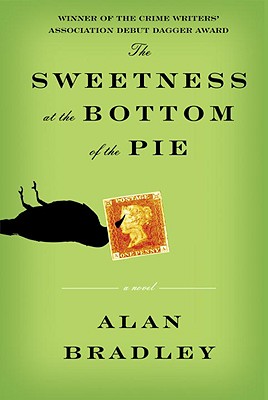
The Sweetness at the Bottom of the Pie


Sorry for the silence this past week-- I've been absurdly preoccupied. This is a novel I checked out of the public library a few days ago.

In his debut novel, Alan Bradley offers his readers the eleven year old Flavia de Luce. A precocious young girl, she is the youngest of three daughters, heavily occupied with chemistry. Her father, a widower and stamp enthusiast is alarmed when on a summer afternoon, their cook finds a dead Jack Snipe with a postage stamp skewered on its beak. That night Flavia overhears an argument in her father's study. The following morning she is fascinated to find a man in their garden's cucumber patch. With his dying breath he mutters a mysterious word and Flavia is off on the adventure of her life.
Though young and occasionally unkind, Flavia is irresistible. The reader follows her around town on her trusty bicycle, Gladys, while she conduct interviews and searches for clues in her private investigation. Bradley's mystery has plenty of layers of intrigue to keep the reader engaged while Flavia untangles the web.
Though the occasional plot thread proves to be dropped without much ceremony, it is an excellent mystery novel. Truly character driven, you read not just to find a killer, but to discover more about the cast of three dimensional figures Bradley creates. Energetically written, the 370 pages went quickly. There is a sequel out now, hopefully Bradley will be able to recapture what made this novel special again.

Tuesday, May 31, 2011

Teaser Tuesday: The Children's Book

I'm elbow deep in A.S. Byatt's recent novel. The story begins in the 1890s and surrounds the Wellwoods, their family, and friends. Olive Wellwood is a children's book author whose son finds a runaway named Philip in a museum basement on a trip to the city. Thus, the story is set into motion. Byatt paints a landscape of artists, revolutionaries, and dreamers, their lives intertwining and changing at the turn of the century. Teaser:


The Palace of Electricity was set about with warnings. Grande Danger de Mort. It was death without tooth, claw or crushing. An invisible death, part of an invisible animating force, the new thing in the new century.
page 355

I'm enjoying this novel better than her Possession. Though it can be a bit slow at moments, it is an enjoyable pace. Instead of sprinting toward the next action of the plot, Byatt allows the reader to stroll-- drinking in detail and getting to know the characters' internal life along the way.

Monday, May 23, 2011

My kind of party


I love the summer books sales at the local libraries. Love.

Tuesday, May 17, 2011

Atonement by Ian McEwan


I found a paper-back copy of this novel for $1 at a used book store. A very good deal.

It's a hot summer day in 1935. The Tallis family has three young cousin's from the north coming to stay while their parents divorce. Briony Tallis, a budding writer at the age of 13 has composed a play for the cousins to perform. Her older sister, Cecilia, eagerly awaits the arrival of their elder brother Leon from the city. He brings along with him a wealthy candy maker named Paul Marshall.
Cecilia is back from college where she attended along with their cleaning lady's son, Robbie. They avoided each other at school and now back on the family estate together seem to do nothing but make each other anxious or annoyed. They have a scuffle by the fountain in the garden which Briony observes from her window and misinterprets.
The events of the dinner party that evening are complicated by what Briony believes she knows about Robbie.
The second part of the book picks up five years later and follows first Robbie and then Briony through their experiences during the war-- Robbie as a solider and Briony as a nurse in training. It shows how one day and one mistake shapes their entire lives from that day five years ago.

The book combined several different style elements. The first part of the story takes place mainly in the course of one day. Each chapter jumps into the perspective of a different character, but remains in third person. Later in the story, Briony tries writing in a stream of consciousness style made popular in that era by Virginia Woolf, the first part of the novel mimics elements of that style discussed later in the second part.
All of the characters have a rich internal life and it is interesting to see how they intertwine. The style changes in the second part of the book, following one character at a time and stretching over longer periods of time, condensing them.
The epilogue changes again. It is told in the first person, reflective like a journal entry.
Atonement is a beautiful, but heartbreaking story. It balances both intellect and emotion and brings a startling reality and clarity to both the trials of family relationships and the trials of war. Some of the descriptions of injury and illness in the second part of the book may bother more squeamish readers.
Ultimately, it becomes a meditation on love and forgiveness. What it means to work toward being forgiven and forgiving yourself-- spending a lifetime atoning for a sin of childhood. And the epilogue may leave tears in your eyes.

Friday, May 13, 2011

An American Childhood by Annie Dillard


At the recommendation of my advisor, I checked this book out of the library. Annie Dillard is a well-known nature writer who won the Pulitzer Prize at 27. This memoir is about her childhood growing up in Pittsburgh in the 1950s.


Dillard explores her young life from about the age of five to her early teens. The oldest of three girls, and the child of two eccentric parents, she traces her changing interests and growing consciousness in these formative years. From her description of the mysterious creature floating across her walls at night (the light from passing cars she would later realize), to her obsession with the microscope she received for Christmas one year, to discovering boys, religion, people, Dillard's story of her childhood is rich with detail.
Not all the chapters are perfectly chronological, but are more arranged by subject. In spite of the many decades between my own childhood and Dillard's I found it easy to connect to her process of discovery and growing up. She has a knack for zeroing in on those significantly insignificant moments that shape thinking and perspective in a child's life.
Beyond the easy, metaphor-rich writing style, the book is also full of humor. Dillard's mother had a tendency toward practical jokes and Dillard's description of her odd habits and use of her children as straight-men will likely gain at least a smile from readers. Other incidents also stand out: Dillard describes throwing snowballs at passing cars with the neighborhood boys in winter. On one occasion a man stopped his car, got out, and chased Dillard and a friend. The anecdotes all blend seamlessly into one narrative about the process of growing up.
All in all, it's an excellent memoir. Great for a lazy afternoon. Dillard's style is accesible, but not dumbed down. I will certainly be reading more of her work in the future.